
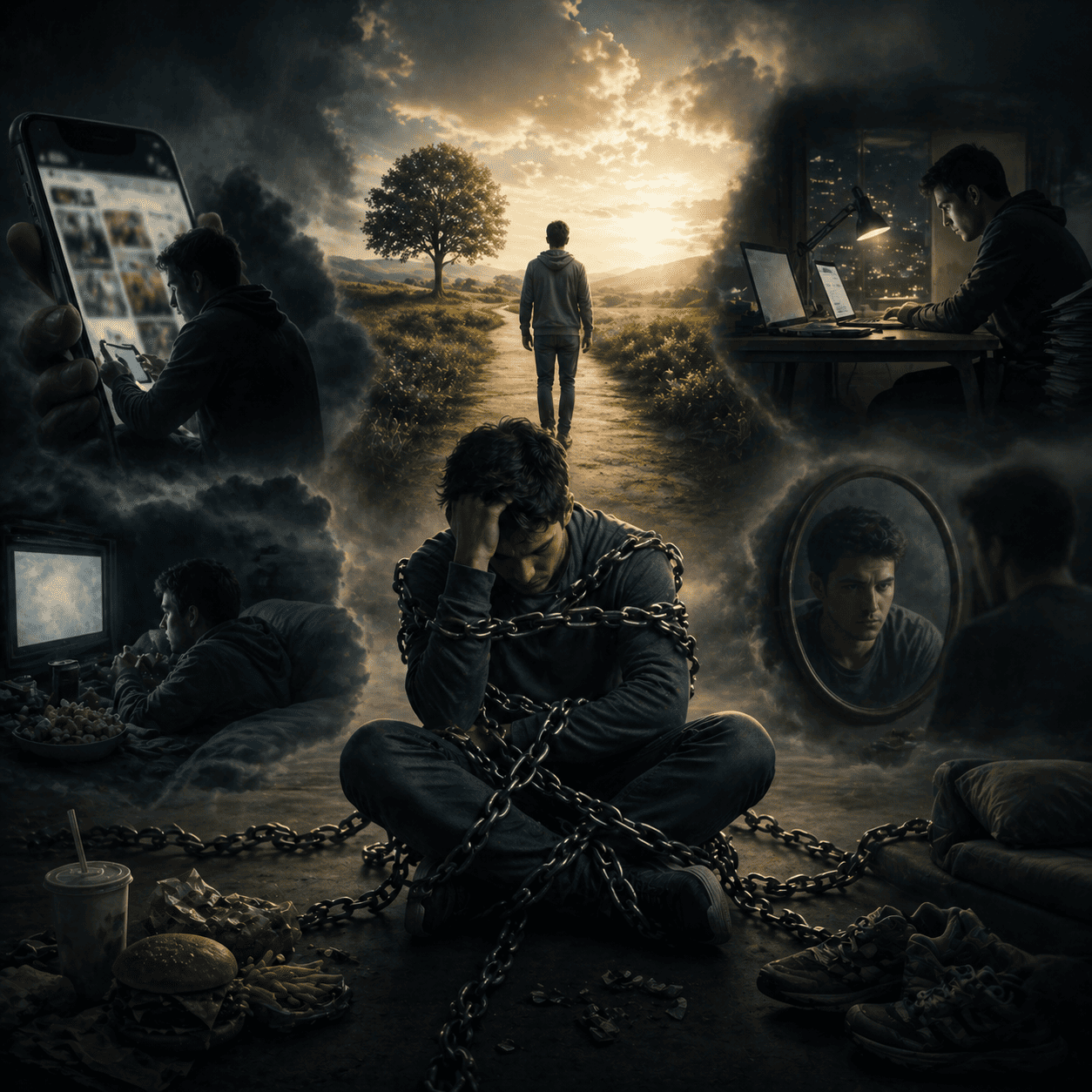
Habits which are damaging your mental health. (Unseen Chains: The Subtle Habits Stealing Your Peace)
Are you really in control of your daily life? Or are there unseen forces, seemingly small habits, subtly eroding your mental peace? We often focus on the big stressors—the demanding job, the relationship drama, the financial worries—but what about the quiet, insidious routines we've adopted? The ones that promise comfort but deliver anxiety?
Your mental health isn't just threatened by a single, catastrophic event. It's often chipped away, bit by bit, by the very habits we think are harmless, or even helpful. Let's pull back the curtain on these silent saboteurs and learn how to break free.
The Endless Scroll: A Dopamine Debt
We all do it. You have a spare moment, and your thumb instinctively finds the Instagram or TikTok icon. One minute turns into twenty, and before you know it, you've been doomscrolling through a highlight reel of everyone else's perfect lives. You feel a brief hit of novelty, but what follows is a familiar sting of comparison, inadequacy, and a creeping sense of wasted time.
Social media is designed to be addictive, but its constant flood of curated perfection can leave you feeling like you're falling behind. It creates a "dopamine debt," where the initial reward is followed by a mental and emotional crash. The fix isn't to quit social media entirely (though it's an option!), but to be intentional about your use. Set timers.
Mute accounts that make you feel bad. And, most importantly, recognize that your value isn't measured in likes or followers.
The "Just One More" Syndrome: Trading Rest for Rush
In a culture that glorifies being busy, we've convinced ourselves that rest is a luxury, not a necessity. We stay up late to binge "just one more" episode, answer "just one more" email, or finish "just one more" chore. We're constantly running on a low-grade sleep deficit, which is a direct pipeline to anxiety, irritability, and burnout.
Sleep isn't a passive state; it's an active process where your brain and body repair themselves. Without it, your cognitive functions weaken, emotional regulation plummets, and your ability to cope with stress vanishes. Prioritize your rest. Make your bedroom a sanctuary, not an office or a movie theater. Your mental health will thank you for it.
The Comparison Trap: A Thief of Joy
We're not just comparing ourselves to strangers online; we're constantly measuring our lives against our friends, family, and colleagues. Their new car. Their promotion. Their happy relationship. This habit of constant comparison is a thief of joy, a practice that ensures you'll never feel truly content with your own journey.
Every person's path is unique. Instead of focusing on what you don't have, practice gratitude for what you do. Celebrate the small wins, the personal growth, and the unique quirks of your own life. Your story is your own, and it's a valuable one.
The Neglect of Your Body: Your First Home
How do you treat the most important asset you have—your body? Do you fuel it with processed foods and sugary drinks? Do you let it languish without movement? A sedentary lifestyle and poor nutrition are often seen as physical problems, but they have profound impacts on your mental state.
A diet rich in whole foods and regular physical activity can be as effective as some medications in managing anxiety and depression. Movement releases endorphins and reduces stress hormones. Think of your body as your first home. Taking care of it is a radical act of self-love, and it’s a non-negotiable step toward a healthier mind.
Breaking free from these habits isn't about perfection; it's about awareness. It’s about recognizing the quiet ways you might be hurting yourself and choosing a different path. Your mental health isn't a problem to be solved once, but a garden to be tended to daily. What will you plant today?
