
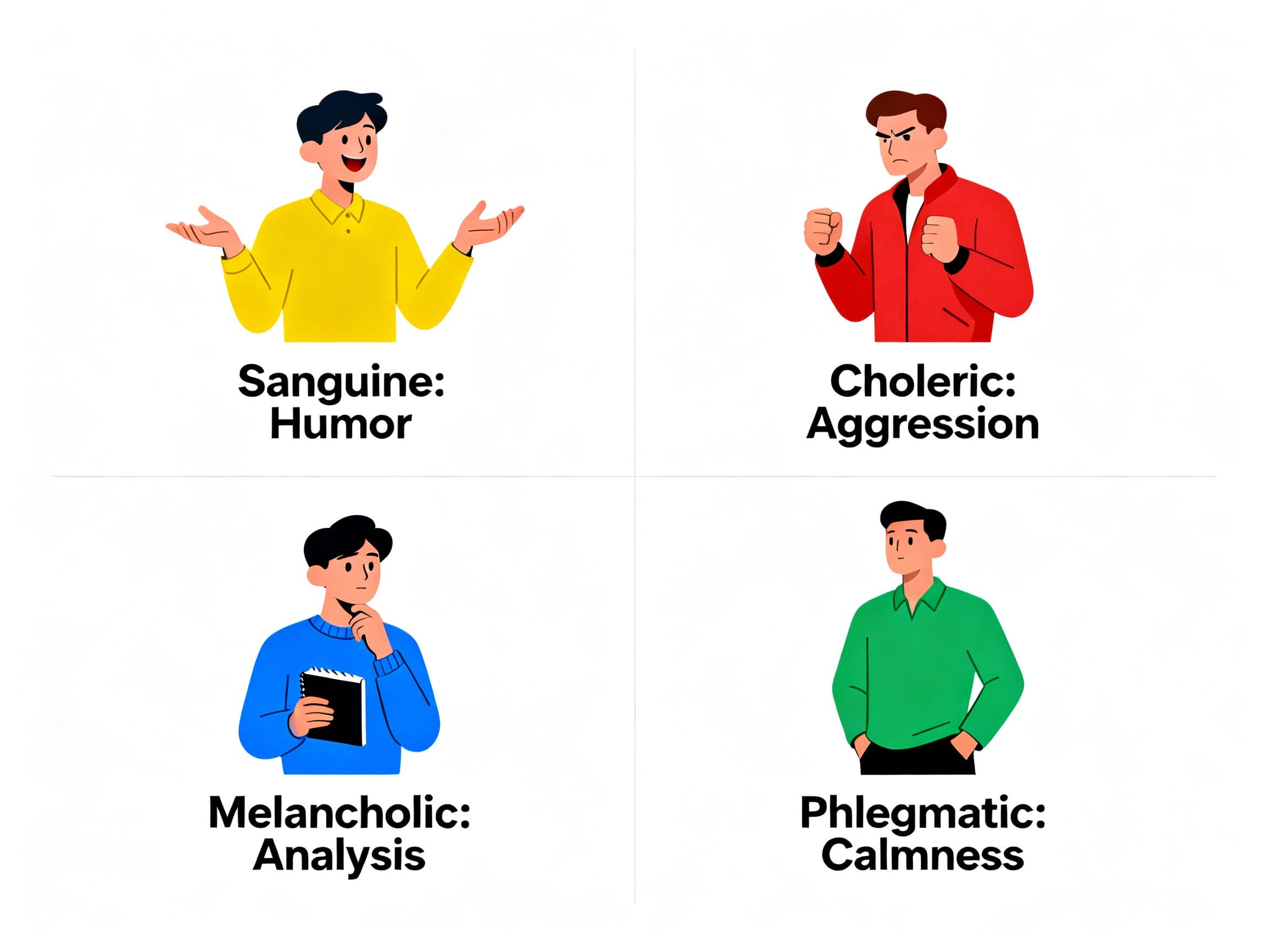
How Different Personalities Handle Stress and Pressure
When deadlines loom and pressure mounts, the four personality types reveal distinctly different coping mechanisms that can either save the day or create additional chaos.
Sanguines: Deflecting with Humor
The Colorful Creative faces stress by initially denying its severity, often cracking jokes and trying to keep things light. "It'll work out somehow!" becomes their mantra as they maintain their characteristic optimism even when the building might be metaphorically burning.
Under extreme pressure, Sanguines may become scattered, jumping from one task to another without completing anything, or they might socialize excessively as an avoidance mechanism. Their strength during stress is maintaining team morale—they prevent panic and keep spirits high. However, they need to balance their optimism with realistic action plans.
When properly channeled, their ability to stay positive helps teams push through difficult periods without losing hope or burning out completely.
Cholerics: Thriving in the Fire
Accomplishers often perform their best under pressure. Stress activates their competitive drive and sharpens their focus. They quickly assess situations, make decisive choices, and take charge, often becoming more efficient as pressure increases.
However, their stress response can also manifest as increased aggression, impatience with others who aren't moving as quickly, and a tendency to bulldoze over people's feelings in pursuit of results. They might snap at team members or make unilateral decisions without consultation.
Their greatest contribution during crises is their ability to cut through confusion and drive toward solutions. They need to remember that not everyone thrives under pressure the way they do and that preserving relationships matters even during emergencies.
Melancholies: Paralysis by Over-Analysis
Analytical Perfectionists respond to stress by seeking more information and planning more thoroughly, which can unfortunately lead to analysis paralysis during time-sensitive situations. They worry extensively about all possible negative outcomes, their minds generating worst-case scenarios that increase anxiety.
Under pressure, they may become withdrawn, critical of themselves and others, and pessimistic about success. However, their stress response also includes tremendous attention to detail that prevents costly mistakes. They're the ones who catch critical errors everyone else missed in the rush.
Their contribution during high-pressure situations is ensuring quality doesn't suffer despite speed requirements. They need encouragement to make decisions with imperfect information and reminders that "good enough" sometimes truly is acceptable.
Phlegmatics: Calm in the Storm
Harmonizers are remarkably steady during stressful situations, maintaining their characteristic calm when everyone else is losing composure. They continue working methodically, aren't easily rattled, and provide a stabilizing presence.
However, under extreme prolonged stress, they may become passive, avoiding conflict even when confrontation is necessary, or they might simply check out emotionally, going through motions without engagement. Their tendency to avoid making waves can mean problems don't get addressed urgently enough.
Their greatest strength during crises is providing the calm, rational perspective that prevents panic-driven poor decisions. They keep teams grounded and functioning when chaos threatens productivity. They need encouragement to speak up about problems and to take initiative even when it might create temporary discord.
