
How Different Personality Types Approach Innovation and Change
Change initiatives reveal stark differences in how personality types respond to new ideas and transformations.
Sanguines: Enthusiastic Early Adopters
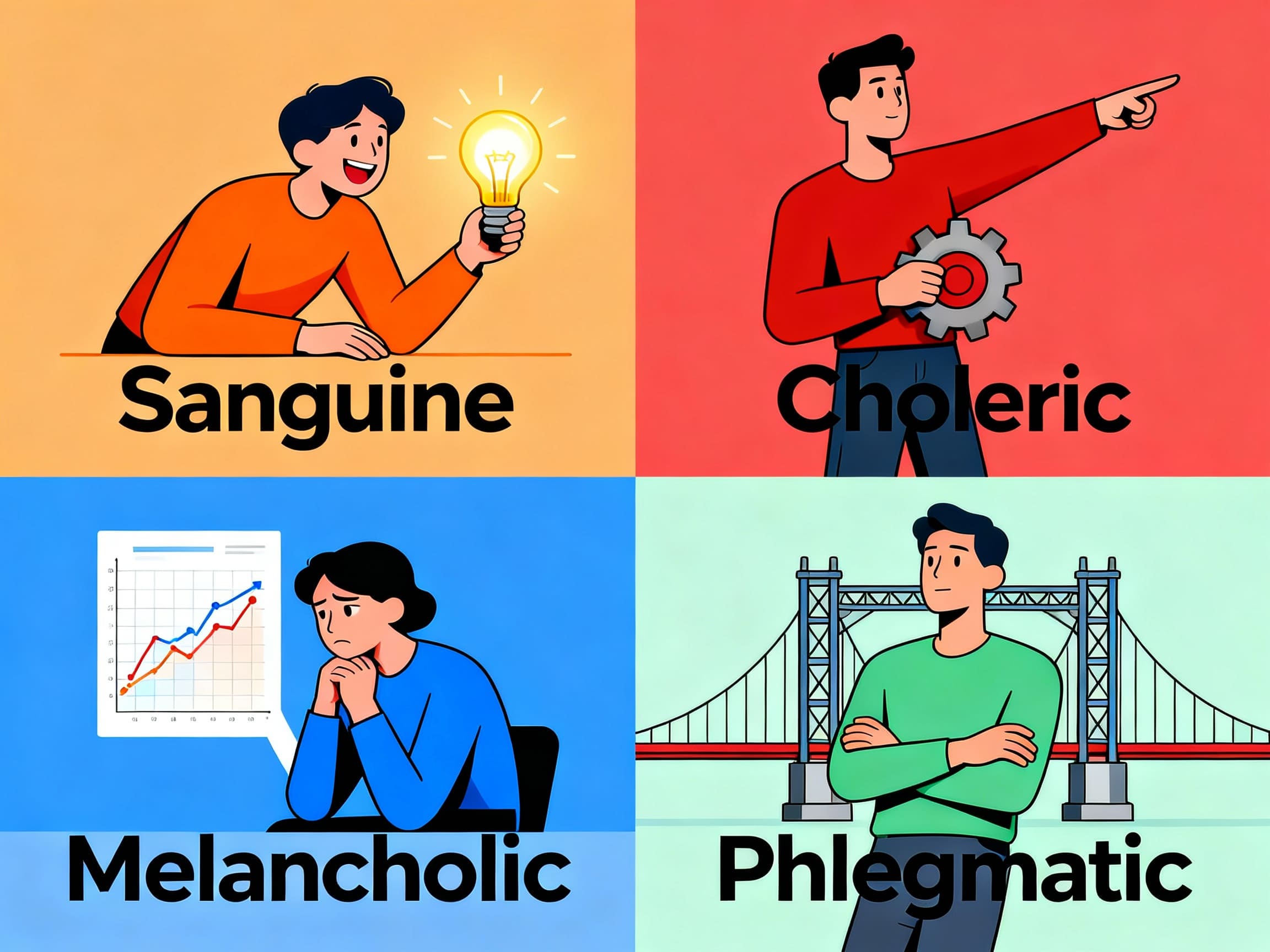
Colorful Creatives greet change with excitement and optimism. "This sounds amazing! Let's try it!" They're immediately enthusiastic about new initiatives, technologies, and approaches. Sanguines generate creative ideas rapidly and enjoy brainstorming possibilities. They're excellent at getting others excited about change through their infectious enthusiasm.
They see opportunities rather than risks, possibilities rather than problems. However, their initial excitement may not sustain through implementation's difficult middle phases. They might jump to the next shiny idea before fully implementing the current one.
Their innovation contribution is generating creative possibilities and building momentum, but they need partners who handle sustained execution. Organizations need Sanguine energy during change initiatives—they prevent the cynicism and resistance that can derail transformation.
Cholerics: Strategic Change Drivers
Accomplishers initiate change frequently, viewing it as necessary for progress and competitive advantage. They're comfortable with disruption if it produces better results. Cholerics drive innovation strategically, identifying inefficiencies and implementing solutions decisively.
They're willing to make tough calls—eliminating outdated processes, replacing underperforming systems, restructuring teams for better results. Their strength is pushing through organizational inertia and resistance. They provide the urgency and decisiveness that moves change from conversation to action.
However, they may drive change too quickly without adequate preparation, underestimate human factors, or bulldoze over legitimate concerns. Their impatience with adaptation periods can create unnecessary resistance. Organizations need Choleric drive to overcome status quo bias, but must temper their pace with adequate transition support.
Melancholies: Cautious Analysts
Analytical Perfectionists approach change carefully, wanting to understand implications thoroughly before committing. They raise important questions others overlook: "What could go wrong? Have we considered all factors? Is this truly an improvement?" They analyze proposed changes meticulously, identifying potential problems and planning carefully.
Their innovation comes through thoughtful refinement and systematic improvement. They prevent costly mistakes by catching flaws in plans before implementation. Their thorough preparation means changes they support are well-designed and likely to succeed. However, their caution can slow needed change, and their focus on risks can create pessimism that discourages innovation.
They may resist change that disrupts their careful systems. Organizations need Melancholy analysis to ensure changes are sound, but must not let their caution prevent necessary evolution.
Phlegmatics: Steady Adapters
Harmonizers neither enthusiastically embrace nor actively resist change—they adapt steadily once change is clearly happening. They prefer stability but accept change as inevitable. Phlegmatics won't lead innovation but will implement changes reliably once direction is clear. Their strength is maintaining operations during transitions and helping others adapt.
They provide stability when everything else is shifting. They're patient with learning curves and help anxious colleagues adjust. However, their passive acceptance means they won't push needed changes or raise concerns until problems become significant. They may slow change through quiet resistance or simply waiting for initiatives to pass.
Organizations need Phlegmatic stability during change, but shouldn't mistake their compliance for enthusiasm or their silence for agreement.
