
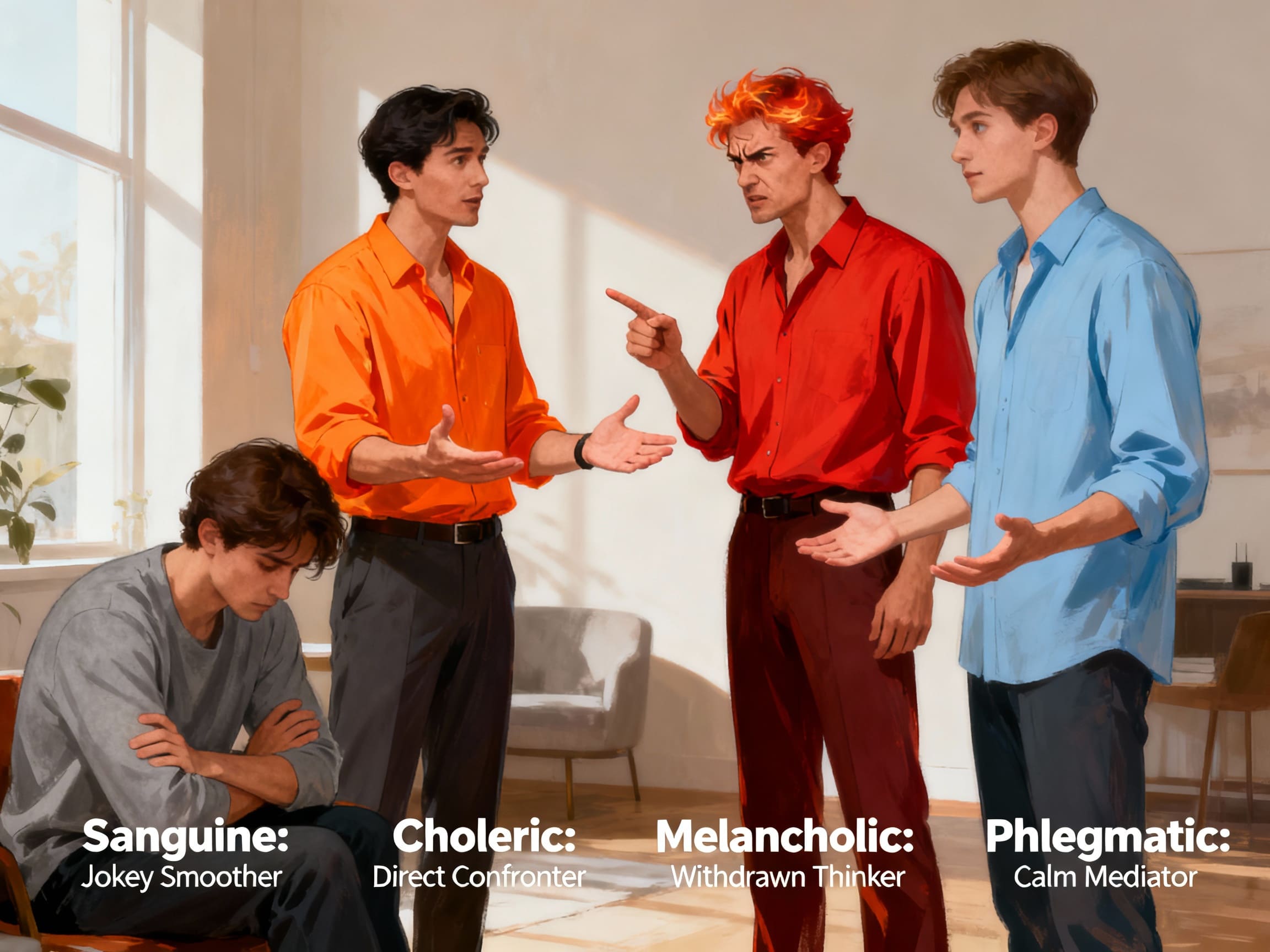
How Different Personality Types Handle Conflict
Workplace conflicts reveal personality types in sharp relief, each approaching disagreement with characteristically different strategies.
Sanguines: Smoothing Over
When conflict arises, Colorful Creatives instinctively try to lighten the mood and restore harmony quickly. "Let's not fight—we're all friends here!" They use humor to defuse tension, sometimes making jokes that might seem inappropriate given the situation's seriousness.
Sanguines are uncomfortable with sustained negative emotions and may minimize legitimate concerns to restore pleasant atmospheres: "It's not that big a deal, let's just move on." They struggle with conflicts requiring prolonged difficult conversations, preferring quick resolutions even if issues aren't fully addressed.
Their strength is preventing conflicts from becoming personal or destroying relationships—they remind people of their common ground and shared positive experiences. However, their avoidance of necessary confrontation can allow problems to fester.
In conflicts, they need reminders that addressing issues thoroughly, even if temporarily uncomfortable, creates healthier long-term relationships than papering over genuine disagreements.
Cholerics: Direct Confrontation
Accomplishers approach conflict head-on, viewing disagreements as problems to be solved efficiently. They're comfortable with confrontation and believe direct communication resolves issues fastest. In conflicts, Cholerics state their positions clearly, expect others to do the same, and push for rapid resolution.
They don't take disagreements personally—arguing about strategy doesn't mean you can't work together afterward. Their strength is addressing problems before they escalate and not letting emotions cloud judgment. However, their directness can feel aggressive to other types.
They may bulldoze over others' feelings, dominate conversations, or make unilateral decisions to end conflicts quickly rather than ensuring all perspectives are heard. They can escalate conflicts unnecessarily by being combative when collaboration would work better.
Effective Cholerics learn to modulate their intensity, ensure others feel heard, and recognize that some issues require processing time rather than immediate resolution.
Melancholies: Withdrawal and Rumination
Analytical Perfectionists find conflict deeply disturbing to their desire for order and harmony. When disagreements arise, they often withdraw to think through their positions carefully, gathering facts and constructing logical arguments. They may avoid immediate confrontation, needing time to process emotions and organize thoughts.
In their minds, they replay conflicts repeatedly, often thinking of better responses after the fact. When they do engage in conflict, they're detailed and specific about grievances, sometimes bringing up past issues that seem resolved. Their strength is thoughtful analysis of problems and identification of root causes rather than symptoms.
They ensure important details aren't overlooked in the rush to resolve. However, their tendency to withdraw can frustrate others who want to address issues immediately. They may hold grudges longer than other types or become overly critical.
They need encouragement to address conflicts in real-time rather than withdrawing, and reminders that perfect resolution isn't always possible.
Phlegmatics: Patient Mediation
Harmonizers instinctively seek to understand all perspectives and find middle ground. In conflicts, they listen carefully to each side, ask clarifying questions, and look for compromises satisfying everyone. They remain calm when others are emotional, providing stabilizing influence.
Their strength is truly hearing what each party needs and crafting solutions considering multiple viewpoints. They're excellent mediators because people trust their fairness and objectivity. They don't pick sides hastily and can see validity in opposing positions. However, their desire to avoid confrontation can mean they don't express their own needs clearly.
They might suppress frustration to keep peace, then become resentful over time. Their compromises sometimes split differences without addressing underlying issues. They may also be too patient with conflicts that require swift, decisive action.
Effective Phlegmatics learn to express their own needs assertively, recognize when compromise isn't appropriate, and take stands on important principles even if it creates temporary discord.
