
How Different Personality Types Manage Time and Priorities
Time management styles reveal fundamental differences in how personality types approach work and organize their lives.
Sanguines: Flexible and Spontaneous
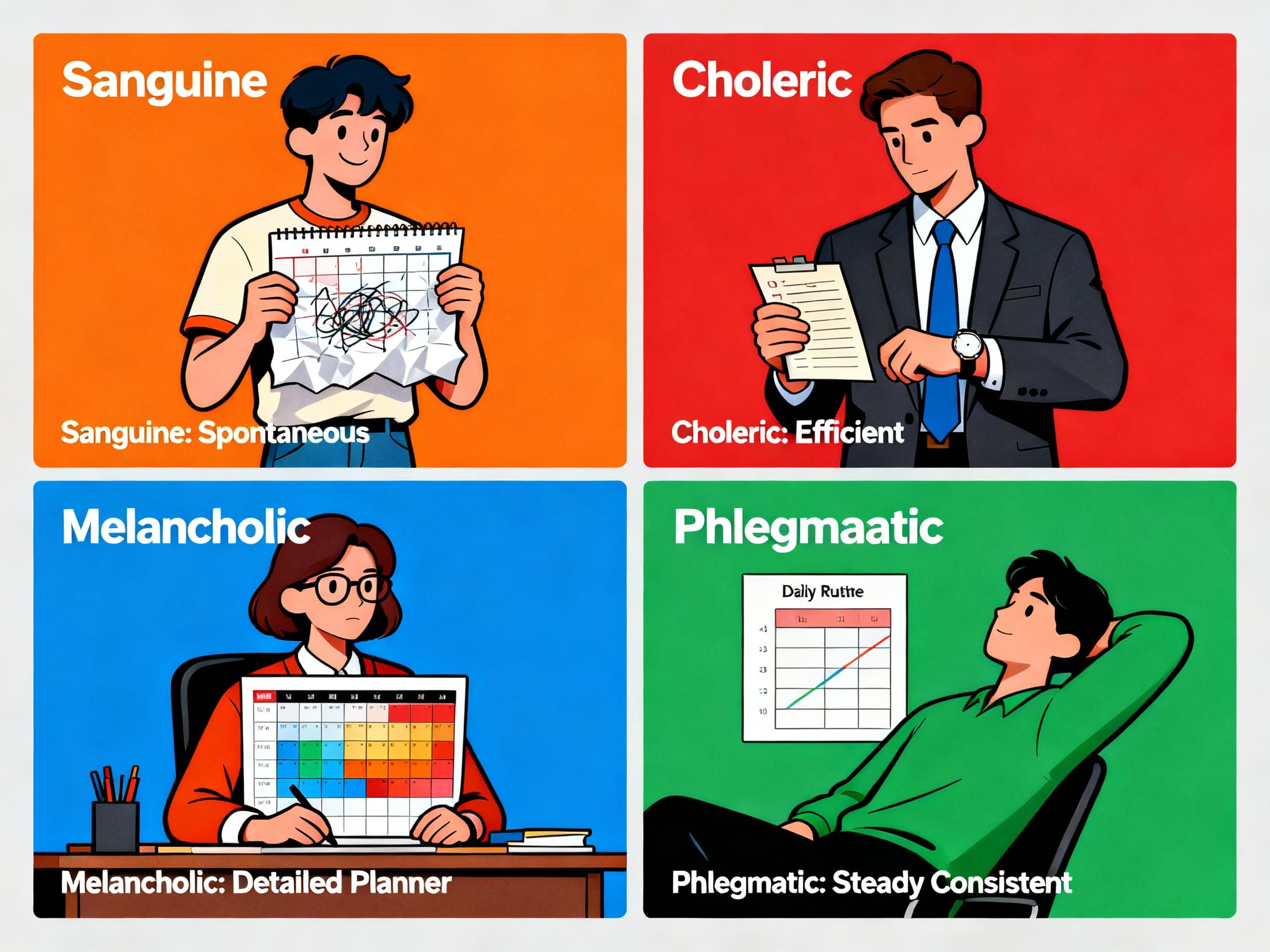
Colorful Creatives resist rigid schedules, preferring flexibility to pursue whatever seems most interesting or urgent in the moment. They start days with intentions but often get sidetracked by conversations, interesting ideas, or others' needs. Their calendars have gaps where they meant to schedule something but never did.
Sanguines work in bursts of energy when inspiration strikes rather than steady, scheduled progress. They're excellent at handling unexpected situations because they're naturally adaptable. However, they struggle with long-term projects requiring sustained focus, often procrastinating until deadline pressure forces completion.
They underestimate time requirements, overcommit, and arrive late because they stopped to chat. Their strength is spontaneity—they can pivot quickly and handle interruptions that would derail others. They need external structures: deadlines, accountability partners, and reminder systems. Apps, alarms, and people checking in help them complete what they enthusiastically started.
Cholerics: Goal-Driven Efficiency
Accomplishers manage time strategically, constantly asking "What's the highest-value use of my time right now?" They prioritize ruthlessly based on impact and goals. Their schedules are packed—back-to-back meetings, ambitious to-do lists, minimal downtime. Cholerics are impatient with time-wasters: inefficient meetings, unnecessary conversations, slow processes.
They multitask constantly, checking phones during conversations, and eating lunch at their desks. Their strength is maximizing productivity and accomplishing remarkable amounts quickly. However, their efficiency can come at costs: burned-out subordinates, damaged relationships, ignored self-care, and short-sighted decisions made too quickly.
They may schedule so tightly that unexpected issues create cascading delays. They need reminders that relationships, rest, and reflection aren't time-wasters but investments in sustainable performance.
Melancholies: Detailed Planners
Analytical Perfectionists approach time management systematically, creating detailed schedules, comprehensive to-do lists, and carefully planned projects. They break large tasks into specific subtasks, estimate timeframes carefully, and build in buffers for unexpected complications. Their planners are works of art—color-coded, cross-referenced, complete with notes.
Melancholies are punctual, prepared, and conscientious about deadlines. Their strength is thorough preparation and realistic planning that accounts for details others miss. However, their planning can become procrastination—spending more time organizing than doing. They may struggle when plans are disrupted or when circumstances demand quick adaptation.
Perfectionism causes them to spend excessive time on tasks that don't require such thoroughness. They need permission to sometimes act without perfect plans and acceptance that some inefficiency is inevitable in dynamic environments.
Phlegmatics: Steady and Consistent
Harmonizers approach time management calmly and consistently, working at sustainable paces without rushing. They create realistic schedules with adequate time for each task. They're rarely in crisis mode because they plan ahead without over-committing. Phlegmatics are reliable—they do what they said they'd do when they said they'd do it.
Their strength is sustainable productivity without burnout. They maintain work-life balance naturally and remain calm when others are frantic. However, their steady pace may seem slow in fast-paced environments. They resist urgency and may not speed up when situations genuinely require it.
Their reluctance to say no means less important tasks sometimes take precedence over higher priorities. They need encouragement to occasionally work urgently, to reprioritize when circumstances change, and to recognize that not all tasks deserve equal time investment.
