
Learning Styles and Knowledge Acquisition Through the Modes
Place three students in the same classroom and they'll emerge with completely different experiences. One leaves enlightened, another frustrated, the third barely aware the class happened. These divergent outcomes reflect not intelligence but the mode through which they engage knowledge.
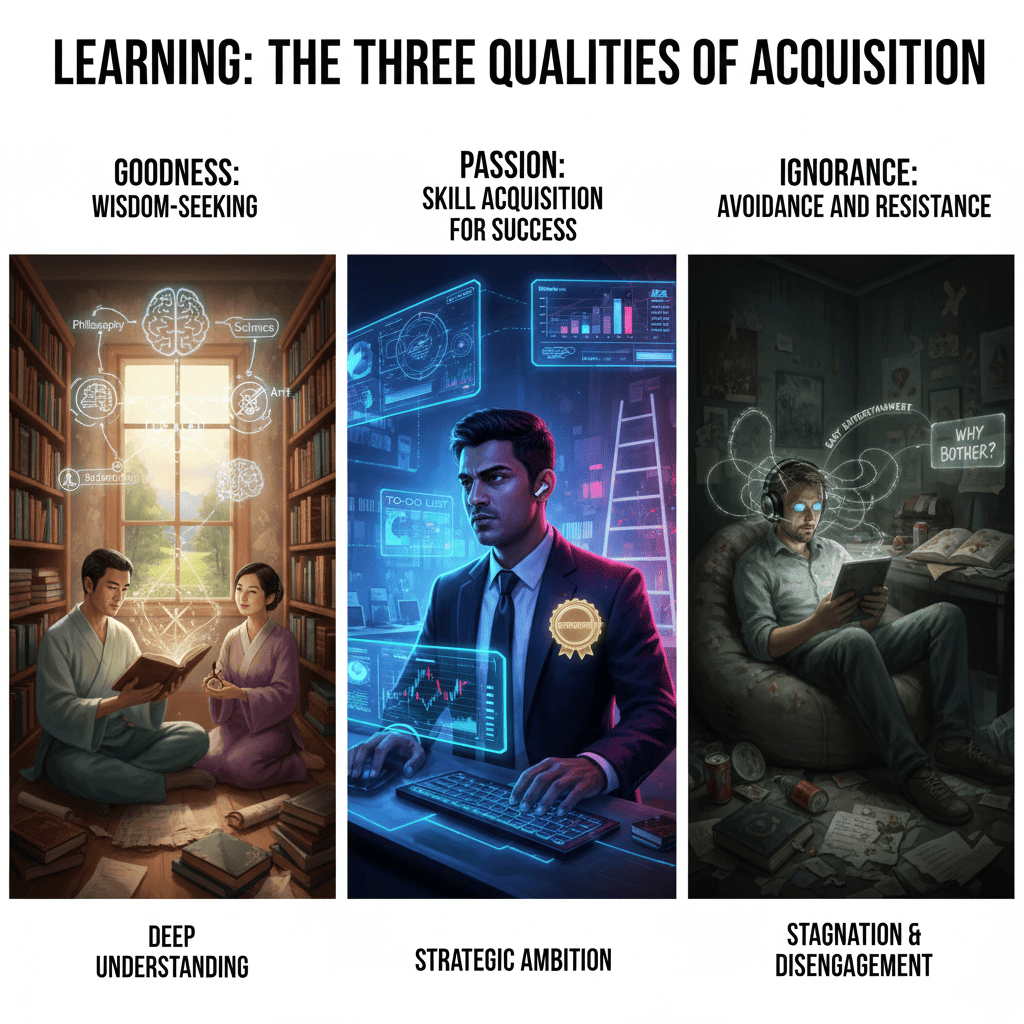
Learning in Goodness: Wisdom-Seeking
The Goodness learner approaches education with genuine curiosity and love for knowledge itself. They ask "why" and "how" questions that go beyond surface facts, seeking to understand principles and connections. This student doesn't just memorize that gravity exists; they contemplate what gravity reveals about the universe's nature.
Sattvic learning is patient and thorough—they prefer depth over breadth, understanding over grades. They're naturally drawn to philosophy, sciences that explain existence, arts that explore human nature, and spiritual teachings. Learning happens everywhere: in conversations, nature, personal reflection, books chosen for insight rather than entertainment.
The sattvic mind retains knowledge because it's integrated meaningfully. They're humble students, acknowledging what they don't know, and they seek teachers with genuine wisdom rather than just credentials.
Learning in Passion: Skill Acquisition for Success
For the Passionate learner, education is strategic—a means to achievement, career advancement, and competitive advantage. They ask, "Will this be on the test?" and "How will this help me succeed?" Their learning is goal-oriented: acquiring skills that build resumes, earning certifications that open doors, networking with influential people.
They're drawn to business, law, medicine, technology, or any field promising status and income. The rajasic student studies intensely before exams but might forget material immediately after because acquisition mattered more than integration. They're competitive classmates, comparing grades and achievements.
Learning happens efficiently—through shortcuts, study hacks, and whatever works fastest. They're attracted to dynamic teachers who entertain and inspire action. Knowledge is power, and power means getting ahead.
Learning in Ignorance: Avoidance and Resistance
In Ignorance, learning feels like unwelcome effort. The tamasic student attends class because they must, sitting in the back, disengaged. They avoid challenging subjects, choosing easy electives, copying homework, or memorizing just enough to scrape by. Deep questions seem pointless; abstract thinking feels impossible through the mental fog.
They're drawn to entertainment rather than education, preferring videos over books, avoiding anything requiring sustained concentration. The tamasic mind resists new information that challenges existing beliefs or requires changing habits. Learning becomes associated with judgment and failure rather than growth.
They might have convinced themselves they're "just not smart" when actually tamas obscures their natural intelligence. Knowledge seems irrelevant to their lives, so why bother?
Lifelong Learning Patterns
These modes don't end at graduation—they shape whether someone continues learning throughout life or stops growing once formal education ends. Recognizing your learning mode helps you choose educational approaches that work for you and understand why certain subjects or teaching styles resonate while others don't.
