
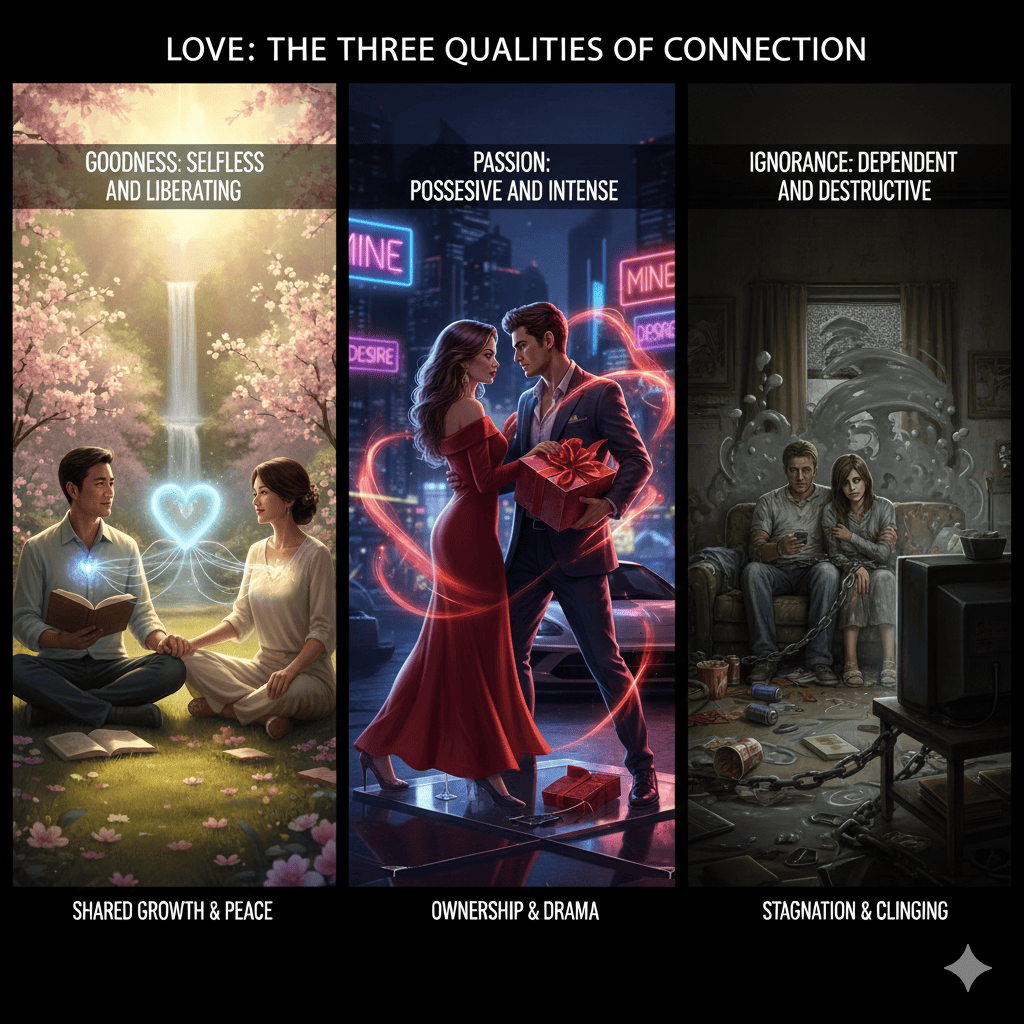
Relationship Patterns: How We Love and Connect Under Different Modes
Love is supposedly universal, yet people experience relationships in radically different ways. The same situation—meeting a potential partner—triggers entirely different responses depending on which mode dominates consciousness.
Love in Goodness: Selfless and Liberating
In Goodness, relationships are based on genuine care for another's wellbeing and growth. Sattvic love asks, "How can I support your becoming your best self?" rather than "What can you do for me?" This person loves the essence of another, not just their appearance, status, or usefulness. They're attracted to character, wisdom, kindness, and shared values.
Conflicts are approached with patience and understanding; they listen deeply, admit mistakes, and prioritize harmony without sacrificing honesty. Sattvic partners encourage each other's individual growth, maintain healthy boundaries, and don't lose themselves in relationships. They can be alone without feeling incomplete.
Jealousy is minimal because they trust and respect autonomy. Love is expressed through acts of service, quality time, and genuine interest in the partner's inner world. These relationships often deepen over time, becoming more meaningful as superficial attractions fade.
Love in Passion: Passionate and Possessive
The Passion person experiences love as intense passion and desire. Relationships begin dramatically—love at first sight, whirlwind romances, grand gestures. They're attracted to physical beauty, status, excitement, and partners who enhance their image. Rajasic love is possessive: "You're mine." Jealousy flares when attention goes elsewhere.
These relationships involve intense emotions—passionate fights followed by passionate reconciliations. Love is expressed through expensive gifts, dramatic declarations, and physical intimacy. The rajasic partner keeps score: "I did this for you, so you should do that for me." They want to be needed, admired, and prioritized above all else.
Conflicts can be explosive because ego gets entangled with relationship dynamics. When the initial passion fades, they might seek excitement elsewhere rather than deepening into companionship. Love feels like ownership and merging rather than two individuals choosing to walk together.
Love in Ignorence: Dependent and Destructive
In Ignorence, relationships are based on dependency, habit, or fear of being alone. The tamasic person might stay in unhealthy relationships because change seems too difficult, or they lack the clarity to recognize dysfunction. Love becomes possessive in a different way—clinging from insecurity rather than passion.
They might tolerate abuse, enabling destructive behaviors because confrontation requires energy they don't have. Tamasic relationships often involve unhealthy patterns: codependency, substance abuse together, or simply coexisting without real intimacy or growth. Communication is poor; resentments build silently. There's attraction to partners who allow them to remain stagnant.
Love feels heavy, obligatory, or like a trap. Alternatively, tamas can manifest as complete emotional disconnection—using people for physical or financial needs without genuine caring.
Relationship Evolution
Most long-term relationships cycle through modes. A rajasic beginning (intense passion) can mature into sattvic companionship or deteriorate into tamasic habit. Understanding these patterns helps you consciously cultivate healthier relationship dynamics and recognize what drives current connections.
