
Sleep, Rest, and Energy Management in the Three Modes
How we sleep and manage energy throughout the day reveals our inner state. The same activity—rest—manifests completely differently across the modes.
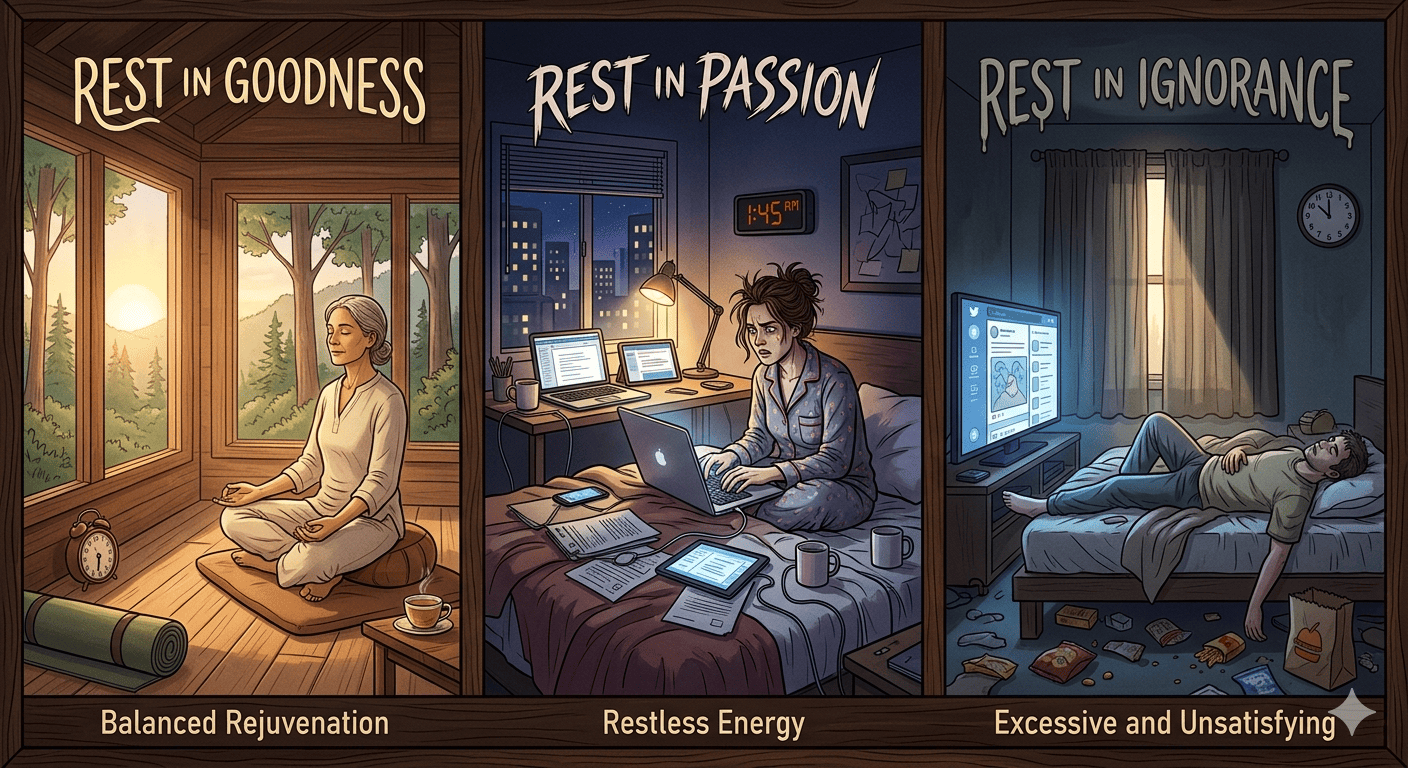
Rest in Goodness: Balanced Rejuvenation
People established in Goodness maintain natural, healthy sleep patterns. They typically sleep 6-7 hours, waking feeling refreshed and alert. Their sleep schedule aligns with natural rhythms—early to bed, early to rise. Sleep isn't escape but necessary rejuvenation. During waking hours, they manage energy wisely, knowing when to work intensely and when to rest.
They take breaks without guilt, understanding that rest enhances productivity. A sattvic person might meditate, practice yoga, or simply sit quietly to recharge. They recognize subtle signs of fatigue and respond appropriately rather than pushing through exhaustion.
Their rest is active recovery—taking walks, spending time in nature, or engaging in peaceful activities that restore vitality. They wake without alarms when possible, trusting their body's natural rhythms. Throughout the day, they maintain steady energy without dramatic peaks and crashes because their lifestyle—diet, exercise, mental state—supports balanced vitality.
Rest in Passion: Restless Energy
The person in passion struggles with rest sometime because slowing down feels unproductive. They might sleep only 4-6 hours sometime and sometime 10-12 hours when no deadline or frustated, viewing sleep as wasted time that could be spent achieving. "I'll sleep when I'm dead" becomes their motto.
When they do sleep, it's often fitful—mind racing with plans, problems, and worries. They might rely on coffee to wake up and sleeping pills to wind down. Rest, when it happens, is often collapse from exhaustion rather than conscious rejuvenation. They vacation aggressively—packed itineraries, adventure sports, and constant activity. Sitting still creates anxiety.
They're prone to burnout cycles: pushing hard until they crash, recovering just enough to start again. Energy comes in waves—high intensity followed by crashes. They might feel guilty resting, checking phones constantly even during downtime. The rajasic person mistakes constant motion for vitality, not recognizing that true energy comes from balanced living.
Rest in Ignorence: Excessive and Unsatisfying
In Ignorence, sleep becomes excessive yet unsatisfying. The tamasic person might sleep 10-12 hours but wake feeling unrefreshed and groggy. They hit snooze repeatedly, struggling to leave bed even after adequate sleep. Daytime naps are frequent—not brief power naps but hour-long escapes. Sleep becomes avoidance: "I don't want to deal with today, so I'll sleep more."
They lack energy despite excessive rest because tamas itself is depleting. Rest happens passively—zoning out in front of screens, lying around doing nothing, or substance-induced stupor. There's no rejuvenation, just killing time. They might stay up late scrolling mindlessly, then oversleep the next morning.
The tamasic person confuses lethargy with tiredness, inactivity with rest. True rest restores; tamasic "rest" perpetuates exhaustion. They wake late, move slowly, feel unmotivated, and count hours until they can sleep again.
Energy as Life Force
Understanding your rest patterns helps you recognize which mode dominates and make conscious changes. Cultivating sattvic rest—proper sleep, mindful relaxation, balanced activity—transforms not just energy levels but entire life experience.
