
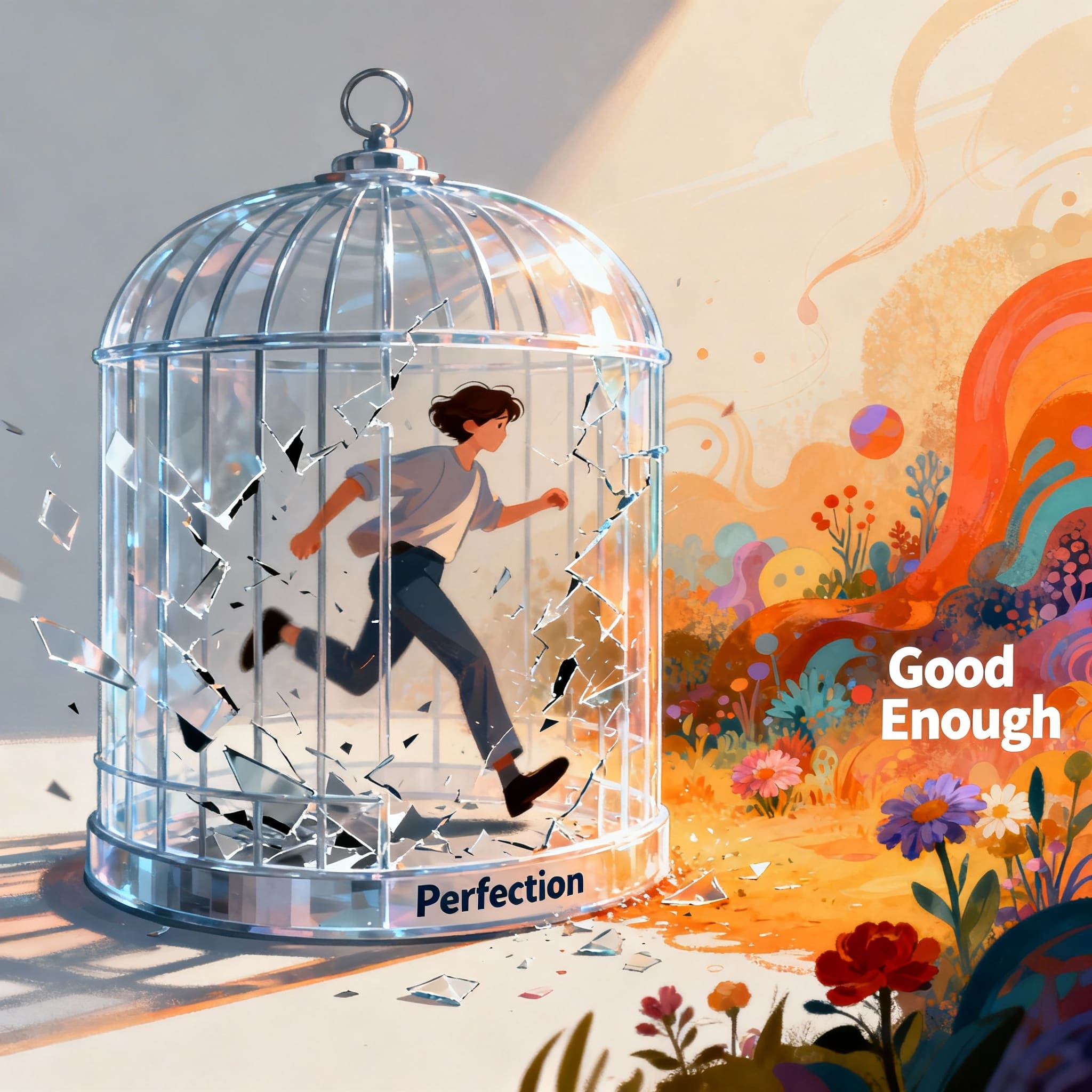
The Perfectionism Trap: When High Standards Become Self-Sabotage
Striving for excellence is a powerful motivator. It pushes us to learn, grow, and achieve great things. But when the desire for excellence turns into an unrelenting demand for flawlessness, it becomes a trap. This is perfectionism—a mindset where high standards become so extreme that they lead to anxiety, stress, and, ironically, self-sabotage.
What Is the Perfectionism Trap?
Perfectionism isn't just about having high standards; it's about tying your self-worth directly to your ability to meet those impossible standards. A healthy striver can feel proud of a job well done, even if it's not perfect.
A perfectionist, however, sees anything less than flawless as a total failure, leading to a constant feeling of not being good enough. This creates a vicious cycle of anxiety and self-criticism.
Signs You're Caught in the Trap
Perfectionism often masquerades as ambition, but its effects are destructive. Here are common signs:
All-or-Nothing Thinking: You believe a project is either a complete success or an utter disaster, with no middle ground.
Chronic Procrastination: The fear of not being able to do something perfectly is so overwhelming that you avoid starting the task altogether.
A Harsh Inner Critic: You have a relentless voice in your head that magnifies every mistake and dismisses every accomplishment.
Difficulty Making Decisions: The fear of making the "wrong" choice can lead to analysis paralysis, leaving you feeling stuck.
Burnout and Exhaustion: The constant pressure to be perfect is mentally and physically draining, leading to chronic stress and exhaustion.
How to Escape the Perfectionism Trap
Breaking free from perfectionism involves shifting your mindset from flawlessness to growth. Here are a few strategies:
Embrace "Good Enough": Recognize that completed is often better than perfect. Give yourself permission to do a "B+" job and move on.
Focus on Progress, Not Perfection: Celebrate small wins and focus on the process of learning and improving rather than just the final, flawless outcome.
Practice Self-Compassion: Treat yourself with the same kindness you would offer a friend. When you make a mistake, acknowledge it without harsh judgment.
Challenge Your Thinking: When you find yourself in an all-or-nothing mindset, consciously look for the "shades of gray." Ask yourself if a mistake truly erases all your effort.
Set Realistic Goals: Break large, intimidating tasks into smaller, manageable steps. This makes it easier to start and builds momentum.
Letting go of perfectionism doesn't mean lowering your standards; it means unhooking your self-worth from your performance. By embracing imperfection and focusing on progress, you can escape the trap and achieve more with far less stress and anxiety.
