
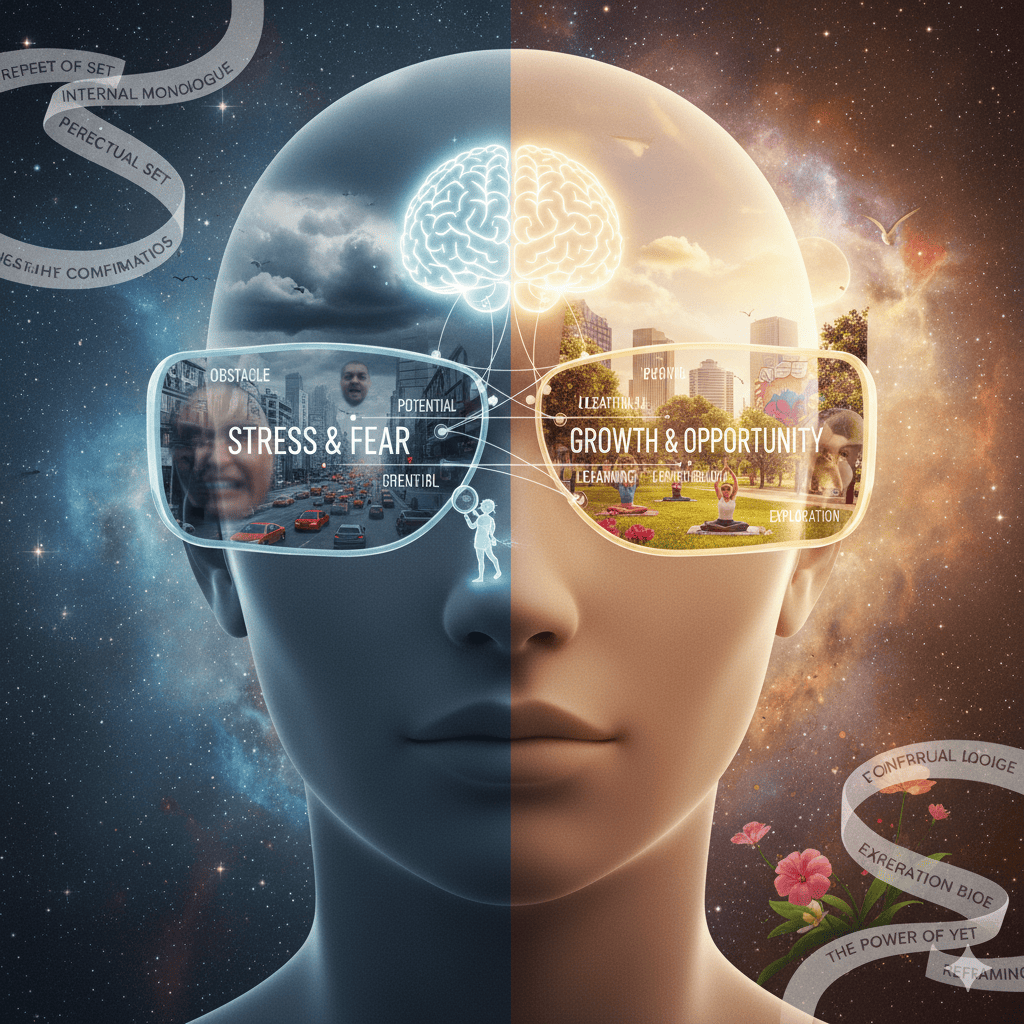
The World Inside Your Head: How Perception Forges Your Mental Reality
We often assume we see the world as it truly is – a universal, objective reality that everyone shares. Yet, the truth is far more fascinating: we don't perceive reality; we construct it.
Our brains are not passive recorders but active architects, building a unique mental reality based on what we choose to see, hear, taste, touch, and smell, and crucially, how we interpret those inputs. This intricate process of perception is the lens through which every thought, emotion, and decision is filtered, fundamentally shaping our individual experience of existence.
The Brain: A Master Editor, Not a Camera
Think of your brain less like a high-definition camera and more like a skilled editor selectively piecing together a documentary. Out of the overwhelming deluge of sensory information available at any given second, your brain filters, amplifies, and interprets only a tiny fraction. This isn't a flaw; it's a survival mechanism.
If we consciously processed every single detail—every skin cell rubbing against our clothes, every subtle shift in light—we'd be paralyzed.
This selective attention is the first powerful shaper of our mental reality. What we pay attention to becomes "real" to us, while everything else fades into the background.
Expectations, Beliefs, and the "Perceptual Set"
Our past experiences, beliefs, values, and even our current mood create a "perceptual set"—a readiness to interpret stimuli in a particular way. This set acts like a template, guiding how we process new information.
* Example: Imagine two people walking through a bustling city.
* Person A (a tourist, excited and open): Notices the vibrant street art, the aroma of a nearby bakery, the diverse faces, perceiving the city as lively and inviting.
* Person B (running late for an important meeting, stressed): Notices the crowded sidewalks, the blaring car horns, the indifferent expressions, perceiving the city as chaotic and hostile.
The sensory inputs are largely the same, but their internal filters create vastly different mental realities of the exact same place.
The Power of Framing: Labeling Our Experience
Language and internal dialogue play a crucial role in how we frame our perceptions. The words we use to describe an event or a person are not just labels; they infuse meaning and emotion, solidifying a particular mental reality.
* Is a challenging task an "insurmountable obstacle" or an "exciting growth opportunity"?
* Is constructive criticism an "attack" or "valuable feedback"?
The way we frame these experiences directly impacts our emotional response, our motivation, and our subsequent actions. A mind that frames challenges as opportunities will perceive a world rich with potential, while one that sees obstacles everywhere will perceive a world full of threats.
Social Perception: The Stories We Tell About Others
Our perception heavily influences our social interactions. We constantly make inferences about others' intentions, personalities, and motives based on limited information. These social perceptions are heavily influenced by:
* Stereotypes: Preconceived notions about groups of people that can lead us to selectively notice or ignore behaviors.
* Halo Effect/Horn Effect: Our overall impression of a person (positive or negative) influencing our perception of their other traits. A single positive trait can "halo" over other traits, making them seem more positive.
These biases mean that our mental reality of another person is often a composite of actual observation mixed with our own assumptions and projections, not a pure reflection of who they truly are.
Conclusion: Your Reality is Yours to Shape
Understanding that perception shapes our mental reality is incredibly empowering. It means we are not passive recipients of a fixed world, but active co-creators of our experience. While we can't always control external events, we can learn to refine our internal filters, challenge our assumptions, and consciously choose the frames through which we view life.
By becoming more aware of how our brains construct reality, we gain the ability to step back, question our initial interpretations, and consciously cultivate a perceptual lens that fosters growth, understanding, and a richer, more nuanced experience of the world—and our place within it.
