
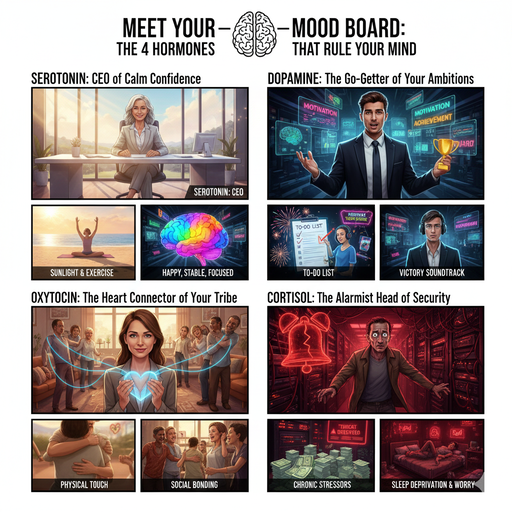
Understanding 4 harmones which affect your mental health. (Meet the 4 Chemical Bosses Who Secretly Run Your Mood)
Of course. Here is an engaging article written in a professional content writer's style, designed to captivate and inspire readers.
The CEO, the Go-Getter, the Heart Connector, and the Crisis Manager: Meet the 4 Chemical Bosses Who Secretly Run Your Mood
Ever had a day where you feel on top of the world for no particular reason? Or a week where a persistent grey cloud seems to follow you, despite your best efforts to shoo it away? We often chalk these feelings up to a good night's sleep or a bad day at work. But the truth is far more intricate and fascinating.
Deep within your brain's bustling headquarters, a powerful executive board is constantly making decisions that dictate your mood, motivation, and mental resilience. This board isn't made up of people, but of four potent hormones. Understanding who they are and what they want is the first step to becoming the master of your own mental well-being. Serotonin: The CEO of Calm Confidence
Think of Serotonin as the calm, steady CEO of your mind. When the CEO is in the office and things are running smoothly, you feel happy, at ease, and emotionally stable. The world seems manageable. You can focus, you sleep well, and you don't sweat the small stuff.
When the CEO is out of office: A serotonin dip can drain the color from your world. Anxieties creep in, obsessive thoughts can take hold, and a feeling of persistent sadness can settle over you. Simple tasks feel monumental, and you might find yourself craving carbs as your body desperately tries to get a quick production boost.
How to Keep the CEO Happy:
Chase the Sun: Just 15-20 minutes of natural sunlight can kickstart serotonin production. Think of it as your morning briefing with the sun.
Move Your Body: Aerobic exercise like a brisk walk, run, or dance is like a positive quarterly report for your brain, boosting serotonin levels.
Dopamine: The Go-Getter of Your Ambitions
Dopamine is the fiery, ambitious executive in charge of motivation and reward. It’s the voice that screams “YES!” when you accomplish a goal, taste delicious food, or listen to your favorite song. Dopamine is what pushes you to achieve, to learn, and to seek out pleasure. It’s the gas pedal of your drive.
When the Go-Getter loses steam: Low dopamine is the essence of procrastination. You know what you need to do, but you just can't summon the energy. You feel bored, apathetic, and uninspired. Nothing seems exciting anymore, and the world feels flat and unrewarding.
How to Motivate the Go-Getter:
Celebrate the Small Wins: Break down large tasks into tiny, completable steps. Each checkmark on your to-do list is a small dopamine hit that fuels the next action.
Create a Victory Soundtrack: Listening to music you love is one of the fastest ways to get a dopamine rush. Oxytocin: The Heart Connector of Your Tribe
Oxytocin is the warm, empathetic leader of human resources. Its entire job is to foster connection, trust, and bonding. It’s the warm rush you feel when you hug a loved one, the trust that builds when you share a secret, and the fierce loyalty you feel for your friends. It’s the glue that holds your relationships together.
When the Heart Connector feels isolated: A lack of oxytocin can leave you feeling lonely, anxious, and disconnected from others. It can heighten stress and make it difficult to form or maintain meaningful bonds, creating a painful cycle of isolation.
How to Empower the Heart Connector:
Give a Real Hug: A genuine, 20-second hug can significantly boost oxytocin levels for both people.
Be Kind: Performing small acts of kindness or even just petting your dog releases this powerful bonding chemical. Cortisol: The Crisis Manager on High Alert
Cortisol is your brain's highly efficient, but highly stressed, Crisis Manager. When a real threat appears—a looming deadline, a sudden danger—Cortisol jumps into action, sharpening your focus and flooding your body with energy to handle the problem. In short bursts, it’s a lifesaver.
When the Crisis Manager never clocks out: Chronic stress keeps the Crisis Manager on duty 24/7. The result? Persistently high cortisol levels. This leads to anxiety, irritability, "brain fog," poor sleep, and eventually, burnout. It’s like running your body’s engine in the red zone, day after day.
How to Give the Crisis Manager a Break:
Breathe Deeply: Just a few minutes of slow, deep breathing signals to your body that the crisis is over, lowering cortisol levels.
Laugh It Off: A genuine laugh can increase oxygen intake and cool down your stress response. Watch a funny video or call a friend who makes you chuckle.
Get a Good Night's Sleep: Sleep is when your body does its most important repair work and resets its hormonal balance. Prioritizing it is non-negotiable for managing stress.
