
Understanding stress and anxiety are they same.
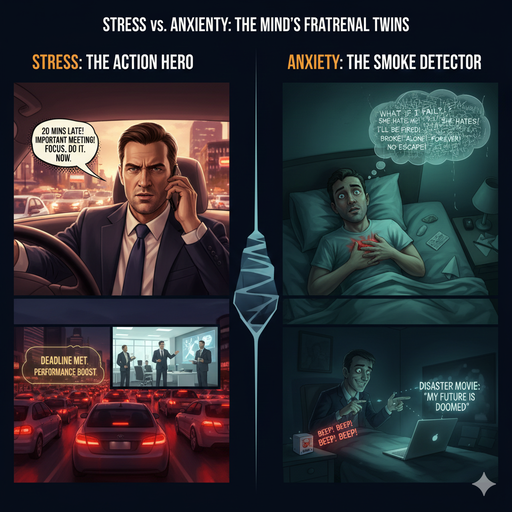
The racing thoughts. The sleepless nights. But is it stress... or anxiety? The answer might surprise you. You're sitting in your car, stuck in traffic, already 20 minutes late for an important meeting. Your heart pounds, your palms sweat, and your mind races through worst-case scenarios.
Later that evening, you find yourself lying in bed, replaying the day's events and worrying about tomorrow's presentation, your mind spinning even though there's nothing immediate to fix.
Here's the plot twist that most people miss: stress and anxiety are like fraternal twins—related, often mistaken for each other, but fundamentally different in ways that matter deeply for your well-being. Stress is your psychological action hero—it shows up when there's a real villain to fight. Got a project due tomorrow?
Stress appears, cape flowing, ready to help you power through. Dealing with a difficult conversation? Stress hands you the energy and focus you need.
The telltale signs of stress:
It has a clear source (that presentation, this deadline, those bills)
It usually fades when the situation resolves
It can actually sharpen your focus and performance
It's proportional to the actual challenge you're facing
Think of stress as your mind's fire alarm. It's loud, immediate, and designed to get you moving right now. Anxiety, on the other hand, is like a smoke detector that won't stop beeping—even when there's no fire, sometimes even when there's no smoke.
Anxiety is stress's complicated cousin who never got the memo about when to leave the party. It's your brain writing horror stories about problems that haven't happened yet—and might never happen at all.
Anxiety's calling cards:
It often lacks a specific, immediate trigger
It persists even when there's no real threat
It feeds on "what if" scenarios and future possibilities
It can feel overwhelming and disproportionate to actual circumstances
Anxiety is like having a screenwriter in your head who only knows how to write disaster movies—and insists on screening them 24/7. There's something profoundly liberating about being able to look at your racing heart and sweaty palms and say, "Ah, this is anxiety about something that might never happen," versus "This is stress about something I actually need to handle."
One requires action; the other requires acceptance, therapy to learn skills to manage.
