
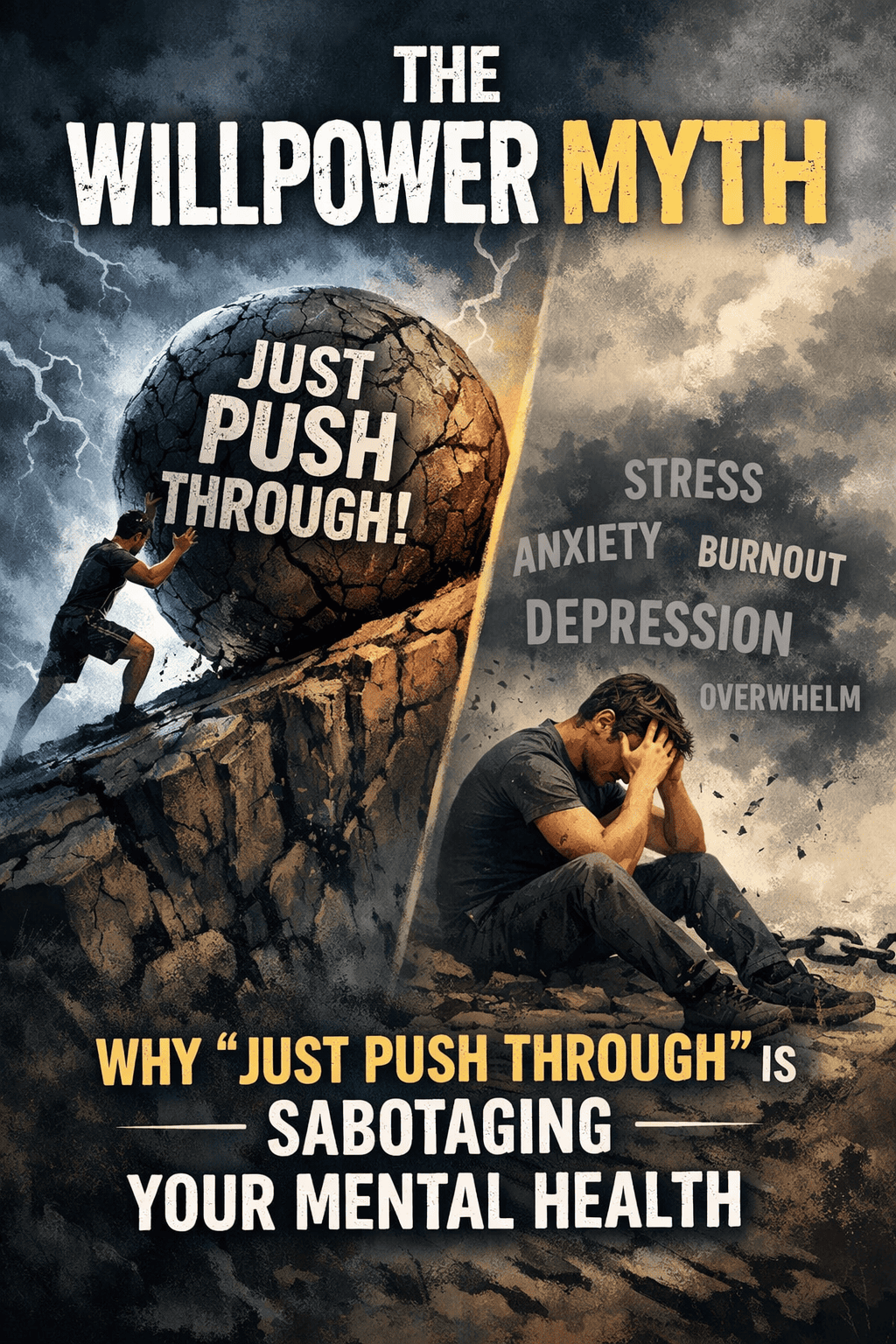
Will power and mental health. (The Willpower Myth: Why "Just Push Through" Is Sabotaging Your Mental Health)
We've been sold a lie about willpower. It's time to discover what really works.
The Willpower Fantasy
"Just push through it." "Mind over matter." "You need more discipline."
Sound familiar? We've built an entire culture around the myth that willpower is an endless well—that the mentally strong can simply force themselves through any challenge. But here's the uncomfortable truth: treating willpower as the cure-all for mental health struggles isn't just ineffective, it's actively harmful.
Your Brain Isn't a Muscle (And That's Good News)
For decades, psychologists thought willpower worked like a muscle—the more you use it, the stronger it gets. But recent research reveals something far more interesting: willpower is more like your phone battery. It drains throughout the day and needs strategic recharging.
When you're dealing with depression, anxiety, or trauma, your mental battery is already running on low power. Demanding more willpower is like asking your dying phone to run a marathon—it's not happening, and forcing it will only cause a crash.
The Willpower Trap That's Crushing You
Here's where things get dangerous: when willpower inevitably fails (because it always does), we blame ourselves. We think:
"I'm weak"
"I should be stronger"
"Other people can handle this"
This self-blame creates a vicious cycle. Poor mental health drains willpower, willpower fails, shame increases, mental health worsens, and the spiral continues downward.
What Actually Works: The Smart Approach
Instead of relying on brute force, mentally healthy people use what psychologists call "effortless strategies":
Environment Design: They change their surroundings instead of fighting their impulses. Can't stop scrolling? Phone goes in another room. Struggling with healthy eating? Junk food doesn't enter the house.
Systems Over Goals: Rather than willing themselves to exercise, they build movement into their daily routine—taking stairs, walking meetings, parking farther away.
Energy Management: They recognize when their willpower is lowest (often evenings) and plan accordingly, making important decisions when they're mentally fresh.
Self-Compassion: They treat setbacks as data, not moral failures, asking "What can I learn?" instead of "Why am I so weak?"
The Permission to Be Human
Here's the radical idea that might change everything: you don't need more willpower. You need better strategies and more self-compassion.
Your brain is doing exactly what it's designed to do. When you're stressed, depressed, or anxious, it prioritizes survival over long-term goals. That's not weakness—that's biology protecting you.
The Real Secret: Working With Your Brain, Not Against It
Mental health isn't about overpowering your thoughts and feelings. It's about:
Understanding your patterns
Creating supportive structures
Being patient with the process
Getting professional help when needed
Accepting that some days will be harder than others
Your New Mantra
Instead of "I need more willpower," try:
"What would make this easier?"
"How can I set myself up for success?"
"What does my brain need right now?"
"How would I treat a friend going through this?"
The Bottom Line
Willpower has its place—in small doses, for short periods, when you're already in a good mental space. But it was never meant to carry the weight of your entire mental health.
The strongest thing you can do isn't to push harder. It's to be smart enough to stop fighting yourself and start working with your human nature instead.
Your mental health journey isn't a test of strength. It's a practice of wisdom, patience, and strategic self-care. And that's far more sustainable than any amount of willpower could ever be.
Stop trying to overpower your brain. Start outsmarting it instead.
